National Removals and Storage
Downsizing Guide: Moving to a Smaller Home
Downsizing means deciding what to keep before you move, not after. This guide explains how to plan a move to a smaller home, from measuring the new rooms to donating, storing and unpacking.
- Written scope
- Inventory and access
- Liability and terms
- Named contact and complaints

Written and reviewed by James Sanders, founder of National Removals and Storage
Last reviewed

The short version
The short answer
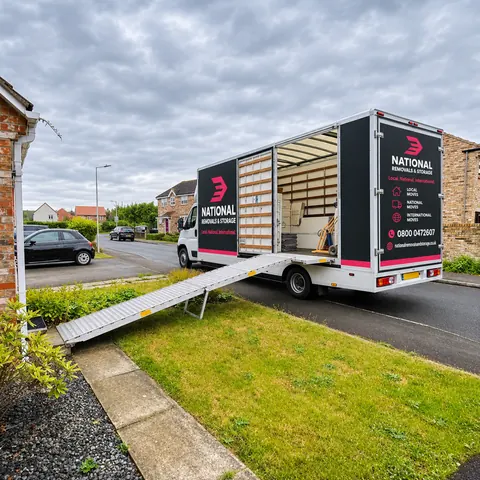
Start with a floor plan of the new home and the measurements of your large furniture. Anything that will not fit needs a decision: give it to family, sell it, donate it, store it or dispose of it. Sort one room at a time, starting with the loft, garage and spare rooms, and give yourself more time than a normal move. Storage gives you room to decide, and a smaller load usually means a smaller crew and vehicle on the day.
 Real team, real vans
Before you book
What to know
The main points, in the order you are likely to need them.
Measure first
A floor plan of the new home shows what fits. Anything that does not becomes a decision to make before move day.
Give, sell or donate
Offer furniture to family first, then sell or donate. Donation depends on condition and fire-safety labels.
Store while you decide
Storage buys time for things you are not ready to part with. Be realistic about what will fit later.
Want us to run these checks with you?
Answer three quick questions and our team will come back with a written quotation.
Hold us to it
Use the same checks when comparing us
A useful checklist should work for every company you consider. Ask us for the same written detail: the agreed inventory, access assumptions, included work, liability terms, payment schedule and the person responsible for your move.
Written scope
Check that the quotation states what is moving, which services are included and what could change the price.
Inventory and access
Make sure stairs, lifts, parking, long carries and unusual items are recorded before move day.
Liability and terms
Read the liability limits, exclusions, cancellation terms and claims process rather than relying on a verbal summary.
Named contact and complaints
Confirm who will coordinate the booking, how changes are recorded and where a complaint can be escalated.
Good questions
Frequently Asked Questions
Answers to common questions about downsizing guide and how the service works.
How early should I start sorting?
As early as you can. Downsizing takes longer than a normal move, so start with the loft, garage and spare rooms months ahead if possible.
Can you take furniture to charity?
Suitable furniture may be donated, but it depends on its condition, fire-safety labels and whether an organisation can take it.
Is storage free?
Our free storage offer covers up to two weeks with a removal. Longer storage is priced by the space you need.
Start with the new floor plan
Measure the rooms in the new home and the large furniture you own. Mark on a floor plan what will go where, and anything that does not fit becomes a decision: sell, give to family, donate, store or dispose of.
Downsizing takes longer than a normal move, so start sorting as early as you can, one room at a time, beginning with the loft, garage and spare rooms.
Read next: Volume calculator
Selling, donating and giving away
Suitable furniture may be donated, but it depends on its condition, fire-safety labels and whether an organisation can take it. Offer furniture to family first and agree a date for them to collect it before move day, so it is not loaded by mistake.
Read next: Donation options
Using storage while you decide
If you are not ready to part with something, storage gives you time. Our free storage offer covers up to two weeks with a removal, and longer storage is priced by the space you need.
Be realistic: if an item will not fit the new home after a few months, storing it longer only adds cost.
Read next: Free storage offer · How much storage space you need
Moving day in a smaller home
Label each box and item with its room, and tell the crew what is going into storage or to another address. Unpack the kitchen and bedroom first, then work through the rest. Fewer belongings also mean a smaller load, which usually means a smaller crew and vehicle.
Read next: House removals · What happens on moving day
Planning a house move
Part of our planning a house move guides
What to arrange, and when, from the first quote to the first week in your new home.
- Moving house checklist
A printable timeline from eight weeks out to the first week after you move, with a change-of-address list.
- How to choose a removal company
The checks that separate a reliable quotation from a cheap one that changes on the day.
- Upsizing to a larger home
Budgeting, decluttering, room plans and packing for a first move into a bigger property.
- How long a house move takes
Moving-day timings by property size, how long packing takes and how long the whole move takes from offer to keys.
- What happens on moving day
The walk-round, loading, keys, unloading and signing the job sheet, in the order they happen.
- Completion day and key delays
When keys are released, what waiting time costs on each service option and what happens if completion slips.
- Moving house with pets
Keeping dogs, cats, fish and small animals safe, and why pets and plants travel with you.
- Moving house with children
Telling children, packing their rooms, keeping them safe on the day and changing schools and doctors.
- Who to tell when you move house
A change-of-address list covering government, council, money, utilities, health and everyday accounts.
Services and tools for this stage
Moving somewhere smaller?
We can move what you keep, store what you are not sure about and talk you through donation. Call 0800 007 4564 for a written quotation.