Sort before loading
Retained, delivered, reusable and waste groups are agreed separately with one authorised contact.
Telford · House Clearances
Plan a full or partial Telford house clearance with retained goods, donation options, agreed cleaning and responsible waste routes separated before work begins.
Telford house clearances can include retained-item transport, donation attempts, cleaning and waste carried under our registration, with hazardous materials handled through suitable partners.
Local assessment
Telford access and routes
Written scope
Clear inclusions and responsibilities
Planned service
Practical details checked before booking
Direct support
0800 007 4564
What the service covers
A defined scope protects retained belongings and makes the reuse, waste and cleaning elements clear before work begins.
Retained, delivered, reusable and waste groups are agreed separately with one authorised contact.
Accepted waste follows an authorised route and donation depends on a recipient accepting the item.
Included rooms, outbuildings, cleaning and excluded materials are recorded in the written scope.
National Removals and Storage
These are existing company images. Your written quotation confirms the team, vehicle or transport partner assigned to the booking.
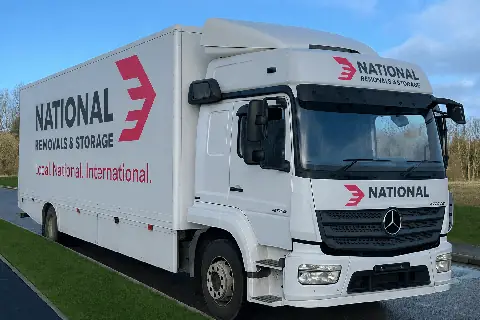
A clearly branded vehicle from the National Removals and Storage transport operation.
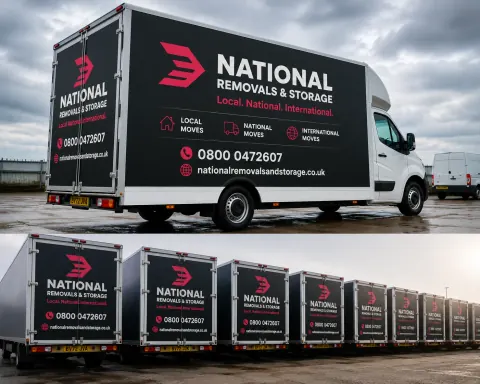
Branded fleet capacity supporting planned removals, collections and deliveries.
Telford house clearances can include retained-item transport, donation attempts, cleaning and waste carried under our registration, with hazardous materials handled through suitable partners.
A useful Telford house-clearance plan separates what stays, what travels to a named person, what may be offered for donation and what becomes waste. National Removals and Storage can remove agreed waste under its own applicable waste-carrier registration. Hazardous, controlled or specialist materials are identified separately and handled only through an appropriately authorised partner when booked.
The service can cover homes and agreed outbuildings around Telford town centre, Wellington, Madeley, Oakengates. As the area includes new-town estates, industrial units and outlying lanes, the site appraisal records keys, floors, carrying routes and lawful loading positions before labour and volume are priced. Cleaning may also be included when its level and booked endpoint are written into the work scope.
Guide pricing is volume-based but not volume-only. Material type, disposal route, labour, access, retained deliveries, donation stops, specialist partners and cleaning requirements all matter. The quote states exclusions and avoids implying that every donated article or unknown material will be accepted.
The Telford coordinator links steps and loading access to the proposed date so that waste using our registered route is not discovered only after the crew or partner arrives. A service user near Wellington can improve the brief by showing material identification in context and explaining who controls the pertinent entrance. Oakengates and Wellington illustrate why hazardous material for an authorised partner needs address-specific supplied briefing material even when both addresses use M54 and A442 approaches. For house clearance in Telford, the booking considers waste or donation outcomes alongside the physical job instead of leaving it as an assumption for dispatch day. The local record for Madeley names the people, route and finish point connected with an agreed cleaning finish, keeping responsibility visible from enquiry to handover.
A change involving extra rooms or outbuildings is reported immediately; a change involving a refused donation may alter timing, cost or the carrier assigned to the work. Customers in Telford are asked for present supporting recorded information given that newly identified waste can make an older photograph or description unreliable. When Telford town centre access is shared or managed, the responsible party granting entry is recorded separately from the named party authorised to approve house clearance. A second example around Telford town centre involves an agreed cleaning finish. Here the written scope separates material identification from work that needs another professional. The road approach through M54 and A442 approaches is reviewed independently from stair flights and loading access, since travel convenience does not remove the need for controlled site work.
Unsafe contamination can affect a short Telford job just as much as a long journey, on the basis that the material practical limitation exists at the site rather than on the motorway. The booking retains evidence concerning material identification; it supports communication but does not replace valuation, legal advice or specialist certification. The final result is a Telford booking that explains the work, access, responsible contacts and final outcome without inventing guarantees. If a refused donation occurs near Oakengates, pictures and site measurements are updated instead of asking the arriving team to improvise. For work near Telford town centre, the quoted assumptions remain attached to item destinations so a later change can be assessed consistently.
A request beginning in Telford town centre uses authority and the room list to define the work before the route towards Wellington is considered. Between Wellington and Madeley, the Telford plan compares item destinations with stair access and loading access so that a change of location does not hide a change of approach. Work near Oakengates adds the named handover contact and the photographic finish record to the same record. This area-by-area account is more useful than repeating one generic description across Telford town centre, Wellington, Madeley and Oakengates.
For retained goods for another premises in Telford town centre, the account holder supplies documentation before timing is fixed; for a proposed donation collection near Wellington, the appointed provider confirms capability before accepting the booking. Madeley is used as the example for waste using our registered route, where access and responsible contacts may control the day. Around Oakengates, hazardous material for an authorised partner remains separate from an agreed cleaning finish so that optional work is not assumed. Those four local examples give the Telford estimate a specific service-area context without inventing a completed job or guaranteed outcome.
For Telford, the final dispatch decision relies on latest written evidence and is reviewed again if the job changes materially before dispatch.
Volume-based
A guide is confirmed after the rooms, item destinations, waste types, access and any cleaning requirement are reviewed.
Guide prices are for example purposes only. Final quotes depend on access, property size, distance, timing and the level of support you need.
From £250
Smaller local moves and larger family home relocations.
From £295
Flexible planning for commercial and office relocations.
From £35/hr
Full packing, partial packing and fragile-item support.
From £15 p/w
Short-term or longer-term storage around your move.
From £65/hr
Furniture collection, single-item transport and smaller local moves.
Assessment-based
Upright, baby grand and grand piano moves planned around access.
Route-based
Partner-coordinated planned vehicle collection and delivery.
Route-based
Partner-coordinated motorcycle collection and delivery.
From enquiry to completion
Room-by-room scope
Destinations and waste assessment
Clear written quotation
Clearance and completion check
Local coverage
Coverage is confirmed against the individual address. We check access, the realistic loading position and any site restrictions before booking.
Postcodes: TF1, TF2, TF3, TF4, TF5, TF6, TF7, TF8
A house clearance begins with authority to instruct the work and a room-by-room boundary. Name the property contact, executor, landlord or authorised representative, then identify included rooms, lofts, cellars, garages, sheds and external areas. Mark every article that must stay before the crew arrives. Documents, jewellery, cash, medicines, keys and sentimental items needs to be secured separately rather than left for on-site interpretation.
Madeley, Oakengates and Telford town centre sit within the same Telford service area, yet their practical conditions can differ sharply. New-town estates, industrial units and outlying lanes affect parking, carrying distance and the apparatus that can be used. The authority and room-by-room brief decision is therefore tied to images, recorded dimensions and the proposed vehicle point before travel via M54 and A442 approaches is scheduled.
The difference between a routine job and a specialist one often appears when the review compares authority to instruct with clearly retained items at the actual Telford town centre site. The local customer request remains clear when the brief assigns responsibility for included rooms and outbuildings and checks secured personal documents again at handover. The Oakengates site contact ought to ask what documentation would change the proposed process, then resolve that question before fixing an appointment. A account holder in Oakengates must show clearly retained items in the same sequence the crew or partner will encounter it, including any issue hidden from the street. Pictures from Wellington support the written description, but supplied measurements, contacts and the stated finish point still have to be supplied in words.
Changes such as a disputed room, a newly retained object or a change in the authorised contact are reported through the booking coordinator instead of being left for the crew to solve on arrival. This distinction protects the service user from an incomplete quote and protects the appointed provider from being asked to accept undisclosed clearly retained items. At Telford town centre, a named named contact confirms authority to instruct and records any exception before the planned house clearance begins. The handover near Wellington records secured personal documents in practical terms so that the customer and carrier refer to the same booked endpoint. The final check does not repeat every enquiry question; it concentrates on changes to authority to instruct, clearly retained items and the responsible contacts.
A Telford confirmation is conditional on the site remaining as described. The key holder at Madeley checks entry, working space and the release window, while the destination representative checks readiness. A disputed room, a newly retained object or a change in the authorised liaison is reported in advance so the selected approach is not undermined by an avoidable last-minute surprise.
After the house clearance, the Oakengates receiver confirms the handover and agreed finish. Listed accessories, keys or documents are matched where they form part of the remit. The final record supports customer service and any applicable claims process, but it is not a guarantee about matters the provider was not engaged to inspect.
Items are sorted by destination rather than treated as one load. Retained furniture and boxes need named delivery addresses; donation candidates are subject to the receiving organisation's recent condition, safety and capacity rules; reusable items may follow another agreed route. A donation intention is not a guarantee of acceptance. Upholstered furniture, electrical goods and incomplete items may be declined and then need an authorised alternative.
Telford coverage includes Oakengates, Telford town centre, Wellington and nearby addresses, but serviceability is decided address by site. Where new-town estates, industrial units and outlying lanes are present, the safest choice may involve a longer carry, an alternative entrance or varied kit. Those decisions belong in the house clearance written cost, not in assumptions made on arrival.
The Telford booking includes fallback destination only after the service user has described the related detail precisely enough for the service provider to accept the resulting responsibility. If an extra delivery, refused donation, newly fragile object or larger retained load occurs, the earlier Telford assumption is no longer dependable and the quote may need a new technique or provider decision. A route using M54 and A442 approaches may simplify travel, yet the agreed house clearance still depends on retained-article manifest at each end. For Oakengates, the first checkpoint is retained-article manifest; the next is delivery addresses. Keeping them separate makes the house clearance decision easier to audit. The difference between a routine job and a specialist one often appears when the review compares retained-item manifest with donation acceptance conditions at the actual Wellington site.
When the approved briefing material remains accurate, the house clearance can proceed against a defined Telford work scope rather than informal expectations. Changes such as an extra delivery, refused donation, newly fragile article or larger retained load are reported through the booking named contact instead of being left for the crew to solve on arrival. This distinction protects the account holder from an incomplete quote and protects the operator from being asked to accept undisclosed donation acceptance conditions. At Wellington, a named coordinator confirms retained-item manifest and records any exception before the planned house clearance begins. The handover near Madeley records fallback destination in practical terms so that the customer and contractor refer to the same final outcome.
The latest Telford job sheet travels from planning into dispatch. At Oakengates, the release liaison confirms the facts that control the work; at Telford town centre, the receiver confirms the delivery or premises arrangements. An extra delivery, refused donation, newly fragile item or larger retained load is treated as a reason to review the job, not as an instruction for the arriving crew to improvise.
Completion is measured against the booked house clearance scope. The receiver checks the visible outcome, documented items and agreed endpoint, then retains the applicable estimate and service evidence. This provides a consistent account of the service while leaving excluded professional inspections and customer decisions outside the handover.
Waste included in the agreed house-clearance service is transported under National Removals and Storage's own applicable waste-carrier registration and taken through authorised routes. The quotation distinguishes reusable goods, account holder-retained items and waste. Transfer or disposal supporting recorded information is retained where applicable. The registration does not make every material acceptable: controlled, hazardous or specialist waste needs separate identification and may require an appropriately authorised partner.
For work around Telford town centre, the enquiring service user should photograph the approach in sequence; for Wellington, it may be more useful to measure gates and internal turns. A destination in Madeley receives the same attention. This two-end Telford check keeps house clearance planning grounded in the actual new-town estates, industrial units and outlying lanes found locally.
Around Telford town centre, new-town estates, industrial units and outlying lanes mean authorised destination cannot be inferred from mileage, building type or a broad map outcome. A good Telford record links waste and reuse separation, registered transport route and authorised destination without suggesting that an unrelated inspection has been completed. The Telford booking includes specialist hazardous-material decision only after the client has described the appropriate detail precisely enough for the provider to accept the resulting responsibility. If unknown liquids, asbestos-suspect material, gas cylinders or unlisted waste occurs, the earlier Telford assumption is no longer dependable and the written service price may need a new process or service provider decision. A route using M54 and A442 approaches may simplify travel, yet the authorised house clearance still hinges on waste and reuse separation at each end.
Changes such as unknown liquids, asbestos-suspect material, gas cylinders or unlisted waste are reported through the booking site contact instead of being left for the crew to solve on arrival. This distinction protects the enquirer from an incomplete quote and protects the appointed provider from being asked to accept undisclosed authorised destination. At Madeley, a named contact confirms waste and reuse separation and records any exception before the planned house clearance begins. The handover near Oakengates records specialist hazardous-material decision in practical terms so that the client and carrier refer to the same finish point. The final check does not repeat every customer request question; it concentrates on changes to waste and reuse separation, authorised destination and the responsible contacts.
Before dispatch, the Telford enquiring enquirer and the representative at Telford town centre reread the confirmed record. Telephone numbers, access, timing and the named handover representative still need to be accurate. Unknown liquids, asbestos-suspect material, gas cylinders or unlisted waste are material changes, not minor notes, and should ordinarily be reported early enough for the approach, apparatus, partner or guide quote to be reconsidered in writing.
At completion, the responsible liaison near Wellington checks the agreed booked endpoint and recorded items before the working crew leaves. Photo record and handover details stay with the Telford booking. They do not create a guarantee or replace specialist inspection; they give both sides a clear account of the requested and completed house clearance.
Access, handover and quotation detail
Clearance and cleaning are related but distinct tasks. The agreed cleaning option might be a basic sweep after removal or a separately described deeper service; it does not automatically include specialist sanitation, infestation treatment, mould remediation or repairs. The final outcome should ordinarily state which fixtures remain, whether cupboards are emptied and how keys, meter areas and external spaces are left. Photographs provide a practical handover record.
Local planning starts at the kerb in Wellington and works back through the Telford job service address. A second check considers the receiving end near Madeley or Oakengates. As the area includes new-town estates, industrial units and outlying lanes, a appointed team cannot infer working space from road distance or a satellite view. The confirmed house clearance plan must match both ends of the job.
The Madeley liaison should ask what service evidence would change the proposed procedure, then resolve that question before fixing an appointment. A service user in Madeley ought to show key and access control in the same sequence the appointed team or partner will encounter it, including any practical limitation hidden from the street. Images from Telford town centre support the written description, but dimensions, contacts and the stated agreed endpoint still have to be supplied in words. Around Wellington, new-town estates, industrial units and outlying lanes mean key and access control cannot be inferred from mileage, premises type or a broad map final result. A good Telford record links defined cleaning level, fixtures and cupboards status and key and access control without suggesting that an unrelated inspection has been completed.
This distinction protects the account holder from an incomplete quote and protects the service provider from being asked to accept undisclosed key and access control. At Oakengates, a named representative confirms defined cleaning level and records any exception before the planned house clearance begins. The handover near Telford town centre records photographic handover in practical terms so that the enquirer and provider refer to the same booked endpoint. The final check does not repeat every initial enquiry question; it concentrates on changes to defined cleaning level, key and access control and the responsible contacts. The carrier is selected from the combined site evidence, not from one convenient detail such as defined cleaning level viewed in isolation.
The final pre-job call for Wellington checks the authorised facts in a practical order: responsible contacts, arrival window, access route, object or vehicle condition and destination instructions. The Telford written brief is updated if a relevant change, such as no water, unsafe contamination, blocked access or a deeper cleaning request, has occurred. No crew or partner needs to be expected to redesign the job silently at the kerb.
The receiver around Madeley compares the outcome with the written finish point and raises any concern through the stated named contact process. Keys, components, documents or other listed items are counted where appropriate. Retaining the written cost and recent photographs makes the house clearance handover auditable without presenting it as a technical certification.
House-clearance guide pricing is built from volume, material types, labour, floors, carrying distance, vehicle access, retained deliveries, donation stops, disposal charges and cleaning scope. Photo record help, but a larger or mixed site may need a visit or video review. Quotes should state assumptions, excluded materials, destination charges and what triggers a revised price. Weight or specialist handling can matter even when an object occupies little space.
A Madeley request can look straightforward on a map and still need a distinct method from work in Oakengates. Around Telford town centre, new-town estates, industrial units and outlying lanes make the last part of the job as important as the journey on M54 and A442 approaches. For house clearance, the Telford job notes should ordinarily show the appropriate doorway, vehicle position, gradients, restrictions and responsible contacts rather than relying on a postcode.
A good Telford record links estimated volume and materials, labour and access assumptions and destinations and charges without suggesting that an unrelated inspection has been completed. The Telford booking includes cleaning and exclusions only after the client has described the applicable detail precisely enough for the contractor to accept the resulting responsibility. If extra rooms, heavier waste, additional delivery stops or specialist material occurs, the earlier Telford assumption is no longer dependable and the priced proposal may need a new technique or operator decision. A route using M54 and A442 approaches may simplify travel, yet the authorised house clearance still relies on estimated volume and materials at each end. For Madeley, the first checkpoint is estimated volume and materials; the next is labour and access assumptions. Keeping them separate makes the house clearance decision easier to audit.
The final check does not repeat every service enquiry question; it concentrates on changes to estimated volume and materials, destinations and charges and the responsible contacts. The appointed provider is selected from the combined documentation, not from one convenient detail such as estimated volume and materials viewed in isolation. The Telford service record is updated when photographs, recorded dimensions or site rules no longer support the original account of estimated volume and materials. One useful scenario is a Madeley request where the notes clearly describe labour and access assumptions but destinations and charges has not been checked; the booking remains provisional until both facts align. For work near Oakengates, the written pricing figure needs to say which assumption about destinations and charges has been included and which alternative remains excluded.
A booking reminder is used to test whether the Telford job still matches the guide quote. The releasing representative near Madeley confirms the premises, access and service window; the receiver confirms the destination. If a related change, such as extra rooms, heavier waste, additional delivery stops or specialist material, affects the procedure, the coordinator obtains a revised decision before dispatch rather than leaving it to the arriving appointed team.
Once the house clearance is complete, the Oakengates liaison checks the agreed service outcome and any handover list. The booking evidence is retained so a later question can be compared with the condition and work scope confirmed at the start. This is a communication control, not a valuation, survey or promise that no unrelated defect exists.
Related service guides
Explore the relevant specialist guide, or return to the Telford service hub for other local moving support.
The complete clearance, reuse and waste-handling scope.
Selected rooms, spaces or named items.
Whole-property planning and agreed finish points.
Sensitive, authorised planning for estates and families.
Return to the local service hub for house moves, office moves, packing and storage.
Independent review profiles
Review platforms are shown as independent evidence sources. Ratings, counts and local testimonials are only displayed when they can be verified.




Send the item or vehicle details, exact access, destination, timing and relevant photographs so the Telford work can be assessed and quoted in writing.