Sort before loading
Retained, delivered, reusable and waste groups are agreed separately with one authorised contact.
Cannock · House Clearances
Organise a Cannock property clearance by deciding what stays, what is retained, what may be reused and what is accepted as waste.
Full and partial house clearances are planned across Cannock and nearby communities. Retained goods can be transported, accepted waste removed under the company’s applicable registration, donation routes explored, cleaning defined and hazardous materials referred to suitable partners.
Local assessment
Cannock access and routes
Written scope
Clear inclusions and responsibilities
Planned service
Practical details checked before booking
Direct support
0800 007 4564
What the service covers
A defined scope protects retained belongings and makes the reuse, waste and cleaning elements clear before work begins.
Retained, delivered, reusable and waste groups are agreed separately with one authorised contact.
Accepted waste follows an authorised route and donation depends on a recipient accepting the item.
Included rooms, outbuildings, cleaning and excluded materials are recorded in the written scope.
National Removals and Storage
These are existing company images. Your written quotation confirms the team, vehicle or transport partner assigned to the booking.
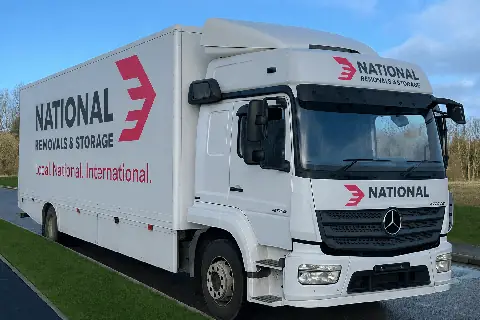
A clearly branded vehicle from the National Removals and Storage transport operation.
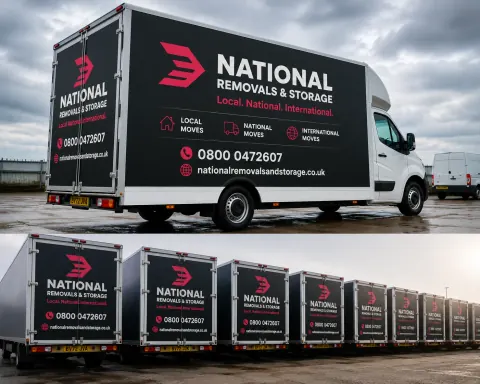
Branded fleet capacity supporting planned removals, collections and deliveries.
Full and partial house clearances are planned across Cannock and nearby communities. Retained goods can be transported, accepted waste removed under the company’s applicable registration, donation routes explored, cleaning defined and hazardous materials referred to suitable partners.
A Cannock house clearance should begin with decisions, not disposal. The authorised customer separates belongings that remain, retained items going to family or storage, possible donation or reuse items, and material that is genuinely waste. Anything sentimental, disputed, undocumented or still undecided stays outside the working scope until a clear instruction is recorded.
The survey covers each included room and hidden volume in lofts, cupboards, garages, sheds and gardens. Homes around Cannock, Hednesford, Heath Hayes, Norton Canes, Bridgtown and Great Wyrley vary in access and outbuilding space, so a bedroom count is not a reliable price basis. Photographs, an outline inventory and destination list make the quotation more dependable.
Accepted waste follows an authorised route under the company’s applicable waste-carrier registration. Unknown chemicals, asbestos-suspect materials, sharps, fuel, gas cylinders and other hazardous items require disclosure and may need a specialist partner. Donation depends on a recipient accepting the item; cleaning is completed only to the standard written into the quotation. Labour, volume, access, destinations, disposal charges and finish determine guide pricing.
Volume-based
A guide is confirmed after the rooms, item destinations, waste types, access and any cleaning requirement are reviewed.
Guide prices are for example purposes only. Final quotes depend on access, property size, distance, timing and the level of support you need.
From £250
Smaller local moves and larger family home relocations.
From £295
Flexible planning for commercial and office relocations.
From £35/hr
Full packing, partial packing and fragile-item support.
From £15 p/w
Short-term or longer-term storage around your move.
From £65/hr
Furniture collection, single-item transport and smaller local moves.
Assessment-based
Upright, baby grand and grand piano moves planned around access.
Route-based
Partner-coordinated planned vehicle collection and delivery.
Route-based
Partner-coordinated motorcycle collection and delivery.
From enquiry to completion
Room-by-room scope
Destinations and waste assessment
Clear written quotation
Clearance and completion check
Local coverage
Coverage is confirmed against the individual address. We check access, the realistic loading position and any site restrictions before booking.
Postcodes: WS11, WS12
Mark items to stay, retained goods to move, possible reuse or donation, and accepted waste. Use a written list supported by photographs rather than relying solely on removable stickers. One named person should resolve conflicts and approve changes, particularly for probate, landlord or family-led clearances.
Documents, photographs, jewellery, medication, keys and other sensitive property should be removed or specifically protected before work starts. If ownership is uncertain, leave the item in place. A clearance team cannot determine entitlement between relatives, tenants, landlords or executors.
The working record for this stage should include authorised decision-maker, four item groups, protected valuables, ownership decisions. Keep those details with the quotation and notify the coordinator if conditions change. The accepted method and guide price depend on the information remaining accurate at collection and delivery.
Before the date, review this part of the Cannock house clearance brief with every person controlling a key, gate, lift, release or receiving appointment. Confirm names, phone numbers, addresses and opening times. Photograph a material change and send it before dispatch rather than waiting for the team or partner to arrive. Keep the agreed route and loading area clear of unrelated items and vehicles. If a third party controls permission or paperwork, obtain confirmation directly. These checks reduce avoidable waiting and preserve a clear chain of responsibility.
Keep the accepted quotation available to both site contacts and check that its assumptions still describe the work. Do not rely on a telephone comment to expand the job. Additional items, a different floor, a changed entrance, an unavailable receiver or a shorter time window can alter labour, equipment and partner availability. Raise the change early enough for a written response. On the day, one authorised contact should be able to make practical decisions without changing ownership instructions or asking the team to use an unassessed route. After completion, compare the delivered outcome with the recorded scope, retain relevant photographs or paperwork and report a concern through the stated contact route.
Open every included cupboard, loft, garage and shed that is safe to access. Show bagged contents, dismantled furniture, garden material and heavy objects. A property with a modest number of rooms can contain substantial volume in its outbuildings, especially where tools or stored household effects have accumulated.
Record narrow side passages, gravel, external steps, low loft hatches and the vehicle position. Items should not be brought downstairs or stacked at the kerb before the survey; doing so hides access effort and can create safety or obstruction problems.
The working record for this stage should include cupboards and lofts, garage and shed contents, heavy or awkward items, external carrying route. Keep those details with the quotation and notify the coordinator if conditions change. The accepted method and guide price depend on the information remaining accurate at collection and delivery.
Before the date, review this part of the Cannock house clearance brief with every person controlling a key, gate, lift, release or receiving appointment. Confirm names, phone numbers, addresses and opening times. Photograph a material change and send it before dispatch rather than waiting for the team or partner to arrive. Keep the agreed route and loading area clear of unrelated items and vehicles. If a third party controls permission or paperwork, obtain confirmation directly. These checks reduce avoidable waiting and preserve a clear chain of responsibility.
Keep the accepted quotation available to both site contacts and check that its assumptions still describe the work. Do not rely on a telephone comment to expand the job. Additional items, a different floor, a changed entrance, an unavailable receiver or a shorter time window can alter labour, equipment and partner availability. Raise the change early enough for a written response. On the day, one authorised contact should be able to make practical decisions without changing ownership instructions or asking the team to use an unassessed route. After completion, compare the delivered outcome with the recorded scope, retain relevant photographs or paperwork and report a concern through the stated contact route.
List retained items by destination and specify who will receive them. A move to storage, a family member and a charity are three different handovers. Reuse organisations decide what they can accept based on condition, safety, demand and capacity, so donation should never be promised without acceptance.
Material treated as waste is described separately and follows an authorised destination. Keep the relevant transfer or disposal documentation where applicable. This separation protects belongings from entering the wrong route and makes labour, vehicle capacity and disposal charges easier to understand.
The working record for this stage should include destination manifest, receiver contacts, donation acceptance, waste documentation. Keep those details with the quotation and notify the coordinator if conditions change. The accepted method and guide price depend on the information remaining accurate at collection and delivery.
Before the date, review this part of the Cannock house clearance brief with every person controlling a key, gate, lift, release or receiving appointment. Confirm names, phone numbers, addresses and opening times. Photograph a material change and send it before dispatch rather than waiting for the team or partner to arrive. Keep the agreed route and loading area clear of unrelated items and vehicles. If a third party controls permission or paperwork, obtain confirmation directly. These checks reduce avoidable waiting and preserve a clear chain of responsibility.
Keep the accepted quotation available to both site contacts and check that its assumptions still describe the work. Do not rely on a telephone comment to expand the job. Additional items, a different floor, a changed entrance, an unavailable receiver or a shorter time window can alter labour, equipment and partner availability. Raise the change early enough for a written response. On the day, one authorised contact should be able to make practical decisions without changing ownership instructions or asking the team to use an unassessed route. After completion, compare the delivered outcome with the recorded scope, retain relevant photographs or paperwork and report a concern through the stated contact route.
Access, handover and quotation detail
Do not mix paint, solvents, fuel, batteries, gas bottles, clinical waste, sharps, asbestos-suspect products or unidentified liquids into general clearance bags. Photograph labels without opening containers and describe where the item is located. Access may be restricted until a competent provider advises on it.
Where specialist removal is possible, the quotation should identify the partner’s role and any separate preparation. National Removals does not reclassify hazardous material as ordinary household waste. Undisclosed items may be left safely in place rather than loaded contrary to an accepted route.
The working record for this stage should include label photographs, material location, specialist referral, clear exclusions. Keep those details with the quotation and notify the coordinator if conditions change. The accepted method and guide price depend on the information remaining accurate at collection and delivery.
Before the date, review this part of the Cannock house clearance brief with every person controlling a key, gate, lift, release or receiving appointment. Confirm names, phone numbers, addresses and opening times. Photograph a material change and send it before dispatch rather than waiting for the team or partner to arrive. Keep the agreed route and loading area clear of unrelated items and vehicles. If a third party controls permission or paperwork, obtain confirmation directly. These checks reduce avoidable waiting and preserve a clear chain of responsibility.
Keep the accepted quotation available to both site contacts and check that its assumptions still describe the work. Do not rely on a telephone comment to expand the job. Additional items, a different floor, a changed entrance, an unavailable receiver or a shorter time window can alter labour, equipment and partner availability. Raise the change early enough for a written response. On the day, one authorised contact should be able to make practical decisions without changing ownership instructions or asking the team to use an unassessed route. After completion, compare the delivered outcome with the recorded scope, retain relevant photographs or paperwork and report a concern through the stated contact route.
A clearance does not automatically include a deep clean. Define whether the requirement is a basic sweep, a more detailed clean or another specified finish, and identify rooms excluded from cleaning. Utilities, water, lighting and safe access may be needed for the agreed work.
At completion, the authorised contact checks the property against the room list, retained-item manifest and requested finish. Photograph the handover condition, record keys and note anything deliberately left. Guide pricing remains tied to the surveyed volume and scope; extra contents or changed destinations require review.
The working record for this stage should include written cleaning standard, utilities and access, completion photographs, key handover. Keep those details with the quotation and notify the coordinator if conditions change. The accepted method and guide price depend on the information remaining accurate at collection and delivery.
Before the date, review this part of the Cannock house clearance brief with every person controlling a key, gate, lift, release or receiving appointment. Confirm names, phone numbers, addresses and opening times. Photograph a material change and send it before dispatch rather than waiting for the team or partner to arrive. Keep the agreed route and loading area clear of unrelated items and vehicles. If a third party controls permission or paperwork, obtain confirmation directly. These checks reduce avoidable waiting and preserve a clear chain of responsibility.
Keep the accepted quotation available to both site contacts and check that its assumptions still describe the work. Do not rely on a telephone comment to expand the job. Additional items, a different floor, a changed entrance, an unavailable receiver or a shorter time window can alter labour, equipment and partner availability. Raise the change early enough for a written response. On the day, one authorised contact should be able to make practical decisions without changing ownership instructions or asking the team to use an unassessed route. After completion, compare the delivered outcome with the recorded scope, retain relevant photographs or paperwork and report a concern through the stated contact route.
Related service guides
Explore the relevant specialist guide, or return to the Cannock service hub for other local moving support.
The complete clearance, reuse and waste-handling scope.
Selected rooms, spaces or named items.
Whole-property planning and agreed finish points.
Sensitive, authorised planning for estates and families.
Return to the local service hub for house moves, office moves, packing and storage.
Independent review profiles
Review platforms are shown as independent evidence sources. Ratings, counts and local testimonials are only displayed when they can be verified.




Send the relevant condition, access, address, handover and timing details so the complete Cannock requirement can be assessed and quoted in writing.