Instrument assessment
The piano type, dimensions and existing condition are recorded before a method is proposed.
Cannock · Piano Relocation
Plan a Cannock piano move around the instrument, the complete carrying route and the final room rather than road mileage alone.
Cannock piano relocation is available for upright, baby grand and grand instruments, subject to a detailed access assessment and written method. Stairs, constrained turns and any possible external lift are reviewed before the move is accepted.
Local assessment
Cannock access and routes
Written scope
Clear inclusions and responsibilities
Planned service
Practical details checked before booking
Direct support
0800 007 4564
What the service covers
The route, preparation and final placement matter as much as the journey. These three checks shape the method and quotation.
The piano type, dimensions and existing condition are recorded before a method is proposed.
Collection and delivery doors, turns, floors, steps and vehicle positions are reviewed separately.
Stairs, external lifting and exceptional access are referred for an appropriate assessed method.
National Removals and Storage
These are existing company images. Your written quotation confirms the team, vehicle or transport partner assigned to the booking.
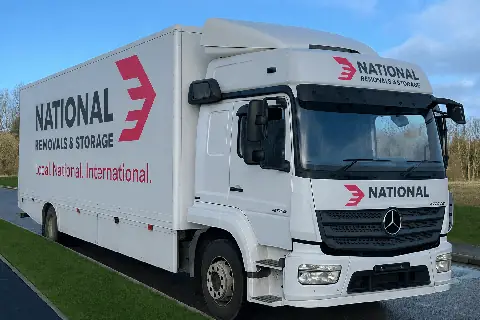
A clearly branded vehicle from the National Removals and Storage transport operation.
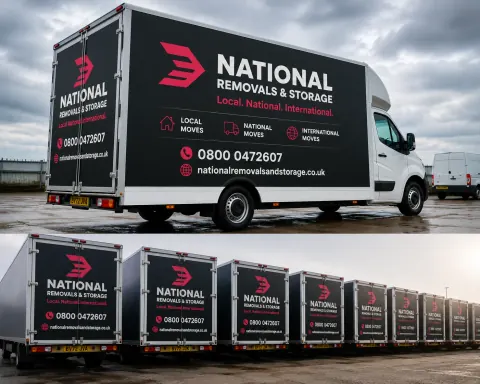
Branded fleet capacity supporting planned removals, collections and deliveries.
Cannock piano relocation is available for upright, baby grand and grand instruments, subject to a detailed access assessment and written method. Stairs, constrained turns and any possible external lift are reviewed before the move is accepted.
A piano journey beginning in Cannock may be short in miles yet demanding in handling. Properties around Cannock town centre, Hednesford, Heath Hayes, Bridgtown, Great Wyrley and Norton Canes range from traditional terraces to newer estates and rural-edge homes. Each creates a different route between the instrument and a safe loading position. The assessment therefore begins inside both properties and works outwards.
Identify the piano as an upright, baby grand or grand and provide the maker, model and dimensions where known. Current photographs should show the case, keyboard side, pedals, legs or castors and any existing marks. The condition record is not a valuation or technical inspection; it gives the moving team a reliable starting point for protection and handover.
The collection and receiving routes are considered separately. Stairs, landings, tight turns, thresholds, gravel, slopes, gates and carrying distance can change labour and equipment. Where an external lift, crane, specialist dismantling or another exceptional method may be needed, an appropriate partner assesses feasibility and responsibility. The guide price is refined only when the accepted route, preparation, timing and final position are known.
Assessment-based
A guide is confirmed after the piano type, dimensions, stairs, carrying route and both addresses are reviewed.
Guide prices are for example purposes only. Final quotes depend on access, property size, distance, timing and the level of support you need.
From £250
Smaller local moves and larger family home relocations.
From £295
Flexible planning for commercial and office relocations.
From £35/hr
Full packing, partial packing and fragile-item support.
From £15 p/w
Short-term or longer-term storage around your move.
From £65/hr
Furniture collection, single-item transport and smaller local moves.
Volume-based
Full and partial clearances with item destinations agreed in advance.
Route-based
Partner-coordinated planned vehicle collection and delivery.
Route-based
Partner-coordinated motorcycle collection and delivery.
From enquiry to completion
Send piano and route details
Access and handling assessment
Written method and quotation
Prepared collection and placement
Local coverage
Coverage is confirmed against the individual address. We check access, the realistic loading position and any site restrictions before booking.
Postcodes: WS11, WS12
Measure the piano from a reliable specification or with care, noting projections that affect a turn. Photograph every side without pulling the instrument away from a wall or attempting to test a doorway. Record damaged castors, loose trim, repaired legs and anything already detached.
If the piano is being bought privately, identify the seller and the person authorised to release it. Schools, churches and venues should name the facilities contact and opening window. A collection cannot be planned around an unconfirmed address, an absent key holder or a description supplied by someone who has not seen the piano.
The working record for this stage should include instrument type and dimensions, current condition photographs, release authority, collection contact. Keep those details with the quotation and notify the coordinator if conditions change. The accepted method and guide price depend on the information remaining accurate at collection and delivery.
Before the date, review this part of the Cannock piano relocation brief with every person controlling a key, gate, lift, release or receiving appointment. Confirm names, phone numbers, addresses and opening times. Photograph a material change and send it before dispatch rather than waiting for the team or partner to arrive. Keep the agreed route and loading area clear of unrelated items and vehicles. If a third party controls permission or paperwork, obtain confirmation directly. These checks reduce avoidable waiting and preserve a clear chain of responsibility.
Keep the accepted quotation available to both site contacts and check that its assumptions still describe the work. Do not rely on a telephone comment to expand the job. Additional items, a different floor, a changed entrance, an unavailable receiver or a shorter time window can alter labour, equipment and partner availability. Raise the change early enough for a written response. On the day, one authorised contact should be able to make practical decisions without changing ownership instructions or asking the team to use an unassessed route. After completion, compare the delivered outcome with the recorded scope, retain relevant photographs or paperwork and report a concern through the stated contact route.
Record the narrowest usable doorway, the depth of each turn and every level change between the piano and the vehicle. In a house near Hednesford or Heath Hayes, a spacious room may still lead to a small porch, stepped drive or side gate. In a flat, the lift car, lift opening, corridor turns and stated load limit are separate checks.
Outside, show the path surface and realistic vehicle position. Do not assume a removals vehicle can block a cul-de-sac, cross a verge or wait on a busy frontage. The carrying distance from threshold to loading point belongs in the quotation, as does any parking or access arrangement controlled by another party.
The working record for this stage should include door and turn measurements, steps and landing sizes, lift information, vehicle position. Keep those details with the quotation and notify the coordinator if conditions change. The accepted method and guide price depend on the information remaining accurate at collection and delivery.
Before the date, review this part of the Cannock piano relocation brief with every person controlling a key, gate, lift, release or receiving appointment. Confirm names, phone numbers, addresses and opening times. Photograph a material change and send it before dispatch rather than waiting for the team or partner to arrive. Keep the agreed route and loading area clear of unrelated items and vehicles. If a third party controls permission or paperwork, obtain confirmation directly. These checks reduce avoidable waiting and preserve a clear chain of responsibility.
Keep the accepted quotation available to both site contacts and check that its assumptions still describe the work. Do not rely on a telephone comment to expand the job. Additional items, a different floor, a changed entrance, an unavailable receiver or a shorter time window can alter labour, equipment and partner availability. Raise the change early enough for a written response. On the day, one authorised contact should be able to make practical decisions without changing ownership instructions or asking the team to use an unassessed route. After completion, compare the delivered outcome with the recorded scope, retain relevant photographs or paperwork and report a concern through the stated contact route.
Photograph a staircase from the top and bottom, count steps by flight and measure clear width at handrail height. Include low ceilings, newel posts and the landing into which the piano must turn. Moving an instrument onto the first step to demonstrate access creates risk and does not replace assessment.
An external lift, crane or hoist requires space for equipment, suitable ground, an accepted opening, property permission and an exclusion area. Weather and overhead restrictions can also control feasibility. If that approach appears necessary, a specialist partner must confirm the method; it is never implied by a general piano quotation.
The working record for this stage should include stair geometry, headroom and turns, possible external opening, specialist feasibility. Keep those details with the quotation and notify the coordinator if conditions change. The accepted method and guide price depend on the information remaining accurate at collection and delivery.
Before the date, review this part of the Cannock piano relocation brief with every person controlling a key, gate, lift, release or receiving appointment. Confirm names, phone numbers, addresses and opening times. Photograph a material change and send it before dispatch rather than waiting for the team or partner to arrive. Keep the agreed route and loading area clear of unrelated items and vehicles. If a third party controls permission or paperwork, obtain confirmation directly. These checks reduce avoidable waiting and preserve a clear chain of responsibility.
Keep the accepted quotation available to both site contacts and check that its assumptions still describe the work. Do not rely on a telephone comment to expand the job. Additional items, a different floor, a changed entrance, an unavailable receiver or a shorter time window can alter labour, equipment and partner availability. Raise the change early enough for a written response. On the day, one authorised contact should be able to make practical decisions without changing ownership instructions or asking the team to use an unassessed route. After completion, compare the delivered outcome with the recorded scope, retain relevant photographs or paperwork and report a concern through the stated contact route.
Access, handover and quotation detail
The guide price combines piano type, preparation, labour, equipment, access at both ends, carrying distance, vehicle arrangements, journey and placement. A flexible ground-floor upright job is different from a fixed-time grand collection with stairs or an external lift, even where the postcodes are close.
Compare written inclusions rather than relying on a headline figure. Check preparation, agreed dismantling, protection, waiting, additional addresses and final room placement. Tuning, restoration, valuation, structural work and building alterations are outside the transport scope unless a qualified provider is expressly named.
The working record for this stage should include accepted handling method, labour and equipment, access assumptions, price exclusions. Keep those details with the quotation and notify the coordinator if conditions change. The accepted method and guide price depend on the information remaining accurate at collection and delivery.
Before the date, review this part of the Cannock piano relocation brief with every person controlling a key, gate, lift, release or receiving appointment. Confirm names, phone numbers, addresses and opening times. Photograph a material change and send it before dispatch rather than waiting for the team or partner to arrive. Keep the agreed route and loading area clear of unrelated items and vehicles. If a third party controls permission or paperwork, obtain confirmation directly. These checks reduce avoidable waiting and preserve a clear chain of responsibility.
Keep the accepted quotation available to both site contacts and check that its assumptions still describe the work. Do not rely on a telephone comment to expand the job. Additional items, a different floor, a changed entrance, an unavailable receiver or a shorter time window can alter labour, equipment and partner availability. Raise the change early enough for a written response. On the day, one authorised contact should be able to make practical decisions without changing ownership instructions or asking the team to use an unassessed route. After completion, compare the delivered outcome with the recorded scope, retain relevant photographs or paperwork and report a concern through the stated contact route.
Clear loose furniture, rugs, boxes and fragile items from the assessed route while leaving measured doors and fixtures as agreed. Tell the coordinator about floor finishes or recently completed decorating that may require a different protection plan. Children and pets should remain outside the working area.
At delivery, the authorised contact confirms the final room and position before unloading. Enough space must remain for controlled placement. Once positioned, the exterior condition record is checked. Tuning or acclimatisation advice should be obtained from a piano technician after the move rather than treated as part of relocation.
The working record for this stage should include clear route, surface concerns, authorised receiver, final position. Keep those details with the quotation and notify the coordinator if conditions change. The accepted method and guide price depend on the information remaining accurate at collection and delivery.
Before the date, review this part of the Cannock piano relocation brief with every person controlling a key, gate, lift, release or receiving appointment. Confirm names, phone numbers, addresses and opening times. Photograph a material change and send it before dispatch rather than waiting for the team or partner to arrive. Keep the agreed route and loading area clear of unrelated items and vehicles. If a third party controls permission or paperwork, obtain confirmation directly. These checks reduce avoidable waiting and preserve a clear chain of responsibility.
Keep the accepted quotation available to both site contacts and check that its assumptions still describe the work. Do not rely on a telephone comment to expand the job. Additional items, a different floor, a changed entrance, an unavailable receiver or a shorter time window can alter labour, equipment and partner availability. Raise the change early enough for a written response. On the day, one authorised contact should be able to make practical decisions without changing ownership instructions or asking the team to use an unassessed route. After completion, compare the delivered outcome with the recorded scope, retain relevant photographs or paperwork and report a concern through the stated contact route.
Related service guides
Explore the relevant specialist guide, or return to the Cannock service hub for other local moving support.
National service scope and assessment guidance.
Planning considerations for upright instruments.
Preparation, access and handling for baby grands.
Specialist planning for full grand pianos.
Return to the local service hub for house moves, office moves, packing and storage.
Independent review profiles
Review platforms are shown as independent evidence sources. Ratings, counts and local testimonials are only displayed when they can be verified.




Send the relevant condition, access, address, handover and timing details so the complete Cannock requirement can be assessed and quoted in writing.